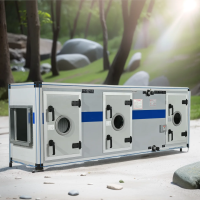
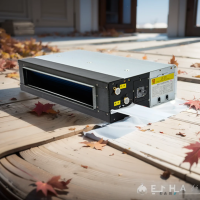
The fan coil unit is the central component of the system. It includes a fan, coil, and housing. The fan circulates air across the heat exchange coil, which is connected to a chilled or heated water supply. The FCU unit can be concealed in the ceiling or mounted in a visible location.
The coil is made of copper or aluminum pipes with fins that facilitate heat transfer between the air and the water circulating through the pipes. The coil is responsible for the heat exchange process, where warm or cool water absorbs or releases heat to regulate room temperature.
The fan is responsible for moving air across the coil and into the room. It is typically an EC motor fan, which provides enhanced energy efficiency and quieter operation. Fans are available in different sizes, depending on the cooling and heating capacity required.
The water valves control the flow of water into the coil. They are essential for regulating the temperature of the air passing through the coil by adjusting the water temperature. These valves can be manual or automated and are often integrated into the system with the help of a thermostat or building management system (BMS).
The thermostat or controller is used to set and maintain the desired room temperature. It controls the water valves and fan operation, ensuring that the fan coil unit responds to changes in the room's temperature. Modern thermostats can be digital, programmable, and even connected to building management systems for remote control and monitoring.
To prevent water damage, a drip tray is installed beneath the coil to catch any condensation that forms as air passes over the cold coil. The tray channels the condensate to a drainage pipe, which safely removes the water from the unit. This is especially important in areas with high humidity.
The filter is a crucial component that traps dust, dirt, and other particles from the air before it passes over the coil. Regular filter maintenance is essential to ensure airflow is not obstructed and to maintain air quality. Filters are often washable or replaceable.
Airflow: The fan pulls air from the room and pushes it over the coil.
Heat Exchange: Water circulates through the coil, and heat is transferred between the water and the air.
Temperature Regulation: The thermostat or controller manages the temperature by adjusting water flow and fan speed.
Water Management: Water valves control the temperature of the air based on the water temperature entering the coil.
Condensation Management: The drip tray and drainage system prevent moisture buildup around the unit, ensuring efficient operation and preventing water damage.
The water system fan coil unit is a complex yet efficient HVAC component that provides heating and cooling in various applications. Its system components—fan, coil, water valves, thermostat, and drainage—work together seamlessly to ensure optimal performance. Regular maintenance of each part is key to ensuring long-term reliability and energy efficiency.
Q1: What materials are commonly used in the coil of a fan coil unit?
A: The coil is typically made of copper or aluminum, as these materials are excellent for heat transfer.
Q2: How often should the filter in a fan coil unit be cleaned?
A: The filter should be cleaned or replaced every 1–3 months depending on usage and air quality.
Q3: What causes water leakage in a fan coil unit?
A: Water leakage is typically caused by a clogged drain, improper slope of the drainage pipe, or damaged coils.